Heated Surfaces
How Heated Driveways and Walkways Work
From the heating elements to the sensors that decide when to run, here's what's actually happening beneath a heated driveway or walkway.
By Patio North · · 3 min read
 Design inspiration
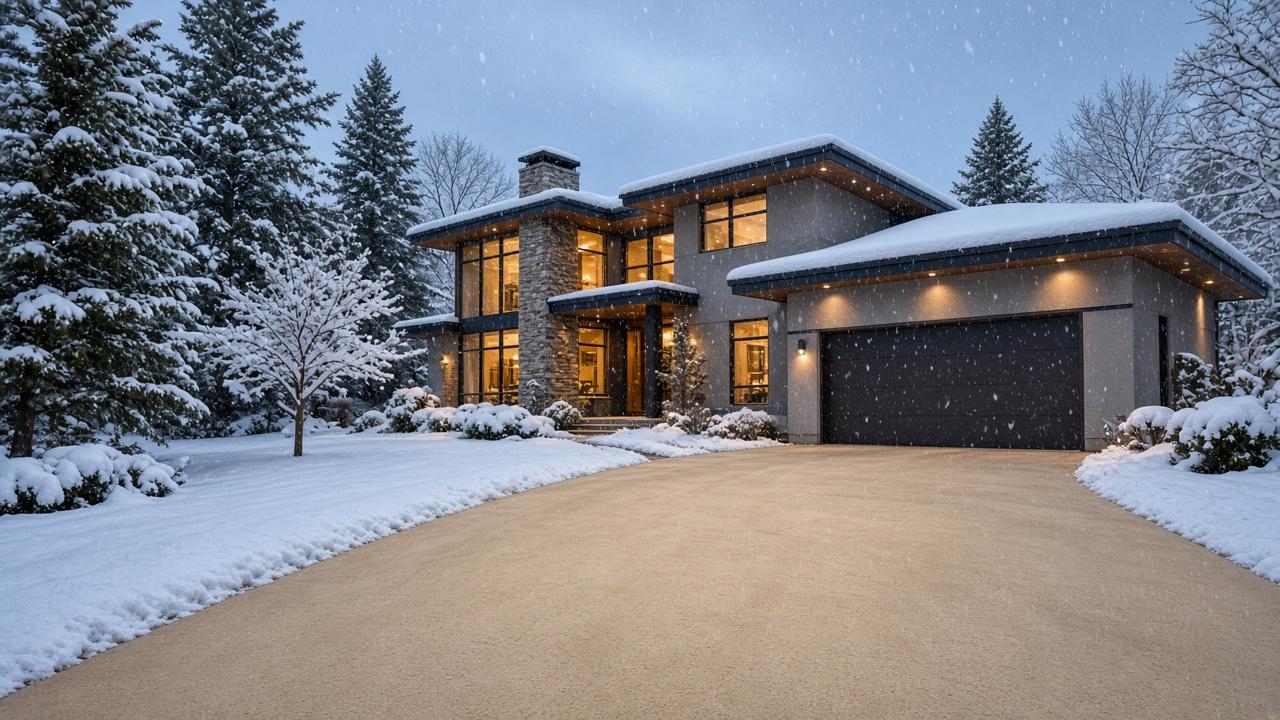
Heated driveways and walkways keep snow and ice off the surfaces you rely on every day. Instead of shoveling, plowing, and salting, a system beneath the surface warms it just enough to melt snow as it falls.
Here's what's involved, in plain language.
The basic system
Every heated surface includes four parts:
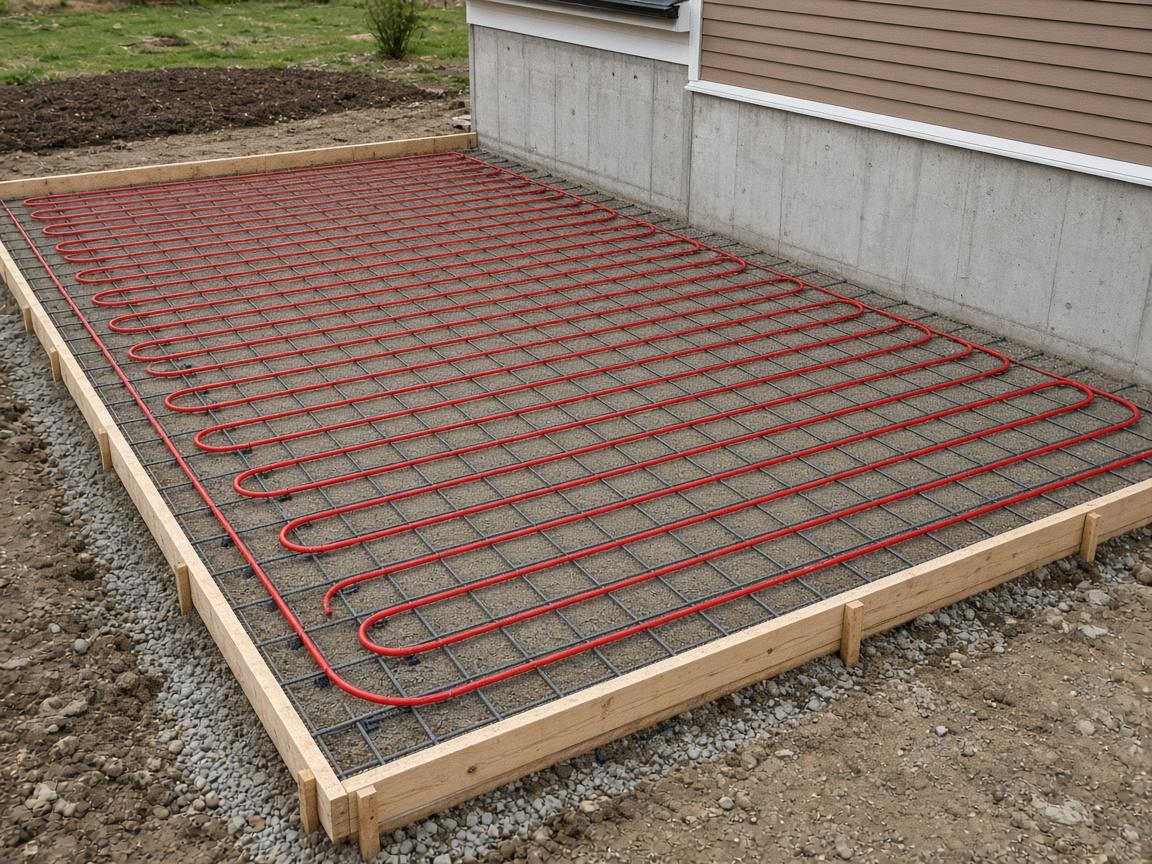
- A heating element beneath the surface: electric cables or mats, or hydronic tubing carrying a heated fluid.
- A heat source: your electrical service for electric systems, or a boiler for hydronic.
- Sensors that detect snow, moisture, and temperature.
- A controller that decides when to turn on, how long to run, and when to shut off.
For a detailed comparison of the two heating approaches, see electric vs. hydronic snow melting.
How the layers fit together
A heated driveway or walkway is built in layers:
- Base and drainage. A stable, well-drained base is essential. Melted snow becomes water, and it has to go somewhere.
- Insulation (where specified). Rigid insulation beneath the heated layer can direct more heat upward instead of losing it into the ground.
- Heating element. Cables, mats, or tubing placed at the depth the system design calls for.
- Surface. Concrete, pavers, or natural stone. In concrete, elements are embedded in the slab. Under pavers, they're typically installed in or beneath the bedding layer, depending on the product.
What happens when it snows
- Snow begins to fall. An aerial sensor or in-slab sensor detects precipitation at a temperature where it will accumulate or freeze.
- The controller turns the system on.
- The surface warms. Snow melts on contact, and water drains off the surface.
- When precipitation stops, the system continues for a set period to dry the surface, reducing refreeze.
- The controller shuts the system off.
Some systems use an idle mode that holds the surface slightly above freezing during cold weather so it reaches melting temperature faster when snow begins. That improves responsiveness but increases run time and operating cost.
Zoning: heat what matters most
You don't have to heat everything. Common priorities include:
- Steps and entry landings, the most important areas for safety
- Main walkways from the driveway to the door
- Driveway aprons or tire tracks instead of the full driveway
- Steep driveway sections where traction matters most
Zoning lets you balance safety and convenience with installation and operating costs. On long rural driveways, targeted zones are usually far more practical than heating the full length.
Drainage is not optional
A heated surface produces water. If that water flows onto an unheated surface or lawn and the temperature is below freezing, it can refreeze as ice right at the edge of the heated area. Good design accounts for:
- Pitch that moves melt water toward a planned destination
- Drains where needed
- Edges that don't trap water
New construction vs. retrofit
New construction is the ideal time. Elements are installed before the surface is placed, insulation can be added, and wiring or tubing can be routed cleanly.
Retrofits are possible in some cases, but usually mean removing and replacing the surface, or using an overlay system where appropriate. Saw-cut cable installations in existing concrete exist, but they aren't suitable for every surface or condition.
If you're building a new patio or walkway and might want snow melting someday, consider installing at least the conduit or rough-in now.
Electrical and mechanical requirements
- Electric systems need sufficient electrical capacity, dedicated circuits, and appropriate ground-fault protection, installed by a licensed electrician.
- Hydronic systems need a properly sized heat source, pumps, manifolds, and freeze-protected fluid, installed by qualified heating professionals.
Both should be tested during installation, since elements must be checked before and after the surface goes down.
Ownership in a Rochester winter
Operating cost depends on the heated area, system type, your utility rates, control settings, and the season's snowfall. A heavy winter means more run time.
Maintenance is typically light: check sensors and controls before winter, keep aerial sensors clear, and follow service schedules for hydronic equipment.
Your surfaces benefit too. Less shoveling and plowing means fewer scrapes, and less de-icing salt means less surface damage on concrete and stone.
Is it worth it?
For many homeowners, heated steps and a main walkway are where snow melting delivers the most value: fewer slips, no early-morning shoveling, and safer access for family and guests. Full driveways and large patios can be worthwhile too, but they're a larger investment to install and operate.
The best starting point is to decide which surfaces matter most to you, then let the design follow. Learn more about heated patios and snow-melting systems.
Plan a snow-free entry.
Tell us which walkways, steps, or driveway areas you'd like to keep clear, and we'll help you understand your options.
Explore Heated Patios