Construction
Can You Install a Concrete Patio During a Rochester Winter?
Cold-weather concrete is possible with the right precautions, but it isn't the default. Here's what changes in winter—and why it's the ideal time to plan.
By Patio North · · 3 min read
 Design inspiration
Homeowners often start thinking about a new patio in the middle of winter, looking out at the yard and imagining next summer. It's natural to wonder whether the work itself can happen during the cold months.
The short answer: concrete can be placed in cold weather with the right precautions, but for residential patios in Rochester, it's usually not the best plan. Winter is better spent designing, budgeting, and getting on the schedule.
What cold does to fresh concrete
Concrete hardens through a chemical reaction between cement and water, called hydration. That reaction slows down significantly as temperatures drop. If fresh concrete freezes before it has gained enough strength, the expanding ice can damage it permanently, leading to a weak or scaling surface.
Industry guidance from the American Concrete Institute treats cold weather as a distinct condition that requires specific planning and protection. In practical terms, when air temperatures are low, or expected to fall low during the protection period, the concrete has to be kept warm enough, for long enough, to cure properly.
What winter concrete work requires
When concrete must be placed in cold conditions, contractors typically need some combination of:
- Frost-free subgrade. Concrete should never be placed on frozen ground. Thawing soil settles, and frozen ground draws heat out of the slab.
- Adjusted mix designs. Mixes may be modified to gain strength faster.
- Protection after placement. Insulated blankets, enclosures, or heat may be needed to hold temperatures during curing.
- Careful timing. Short daylight hours and unpredictable lake-effect weather make scheduling difficult.
Each of these adds cost and risk. For commercial projects with tight deadlines, it's often worth it. For a residential patio, there's usually no reason to accept that tradeoff.
Why spring through fall is better for patios
- More predictable curing. Moderate temperatures allow concrete to gain strength steadily without special protection.
- Better finishing. Decorative and stamped concrete in particular benefit from consistent conditions during placement.
- Sealer application. Many sealers have temperature requirements for application.
- Grading and restoration. Lawn and landscape restoration around the patio is easier in the growing season.
There's also a practical issue: new concrete is vulnerable to de-icing salts in its first winter. A patio poured in late spring or summer has time to cure before it sees salt and freeze–thaw cycles.
What about pavers and natural stone?
Pavers and stone don't cure like concrete, but they still rely on a compacted base. Working frozen or saturated soil isn't good practice, and spring thaw can reveal problems with a base built in poor conditions. The same advice applies: plan in winter, build when the ground is workable.
What you can do during winter
Winter is the ideal season to:
- Define how you'll use the space. Dining, lounging, cooking, a hot tub, room for kids.
- Settle on a budget range. It shapes material choices. Our article on concrete patio costs explains the main factors.
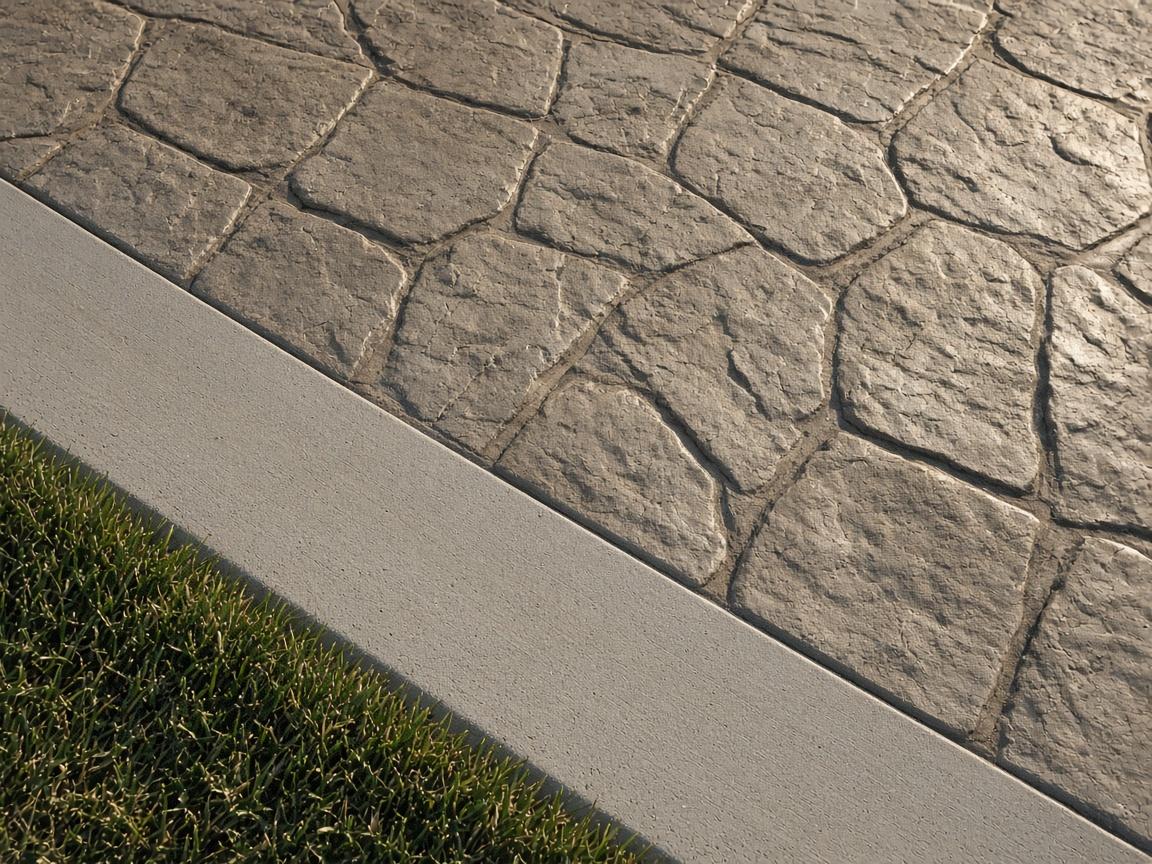
- Choose materials. Compare stamped concrete and pavers, or natural stone.
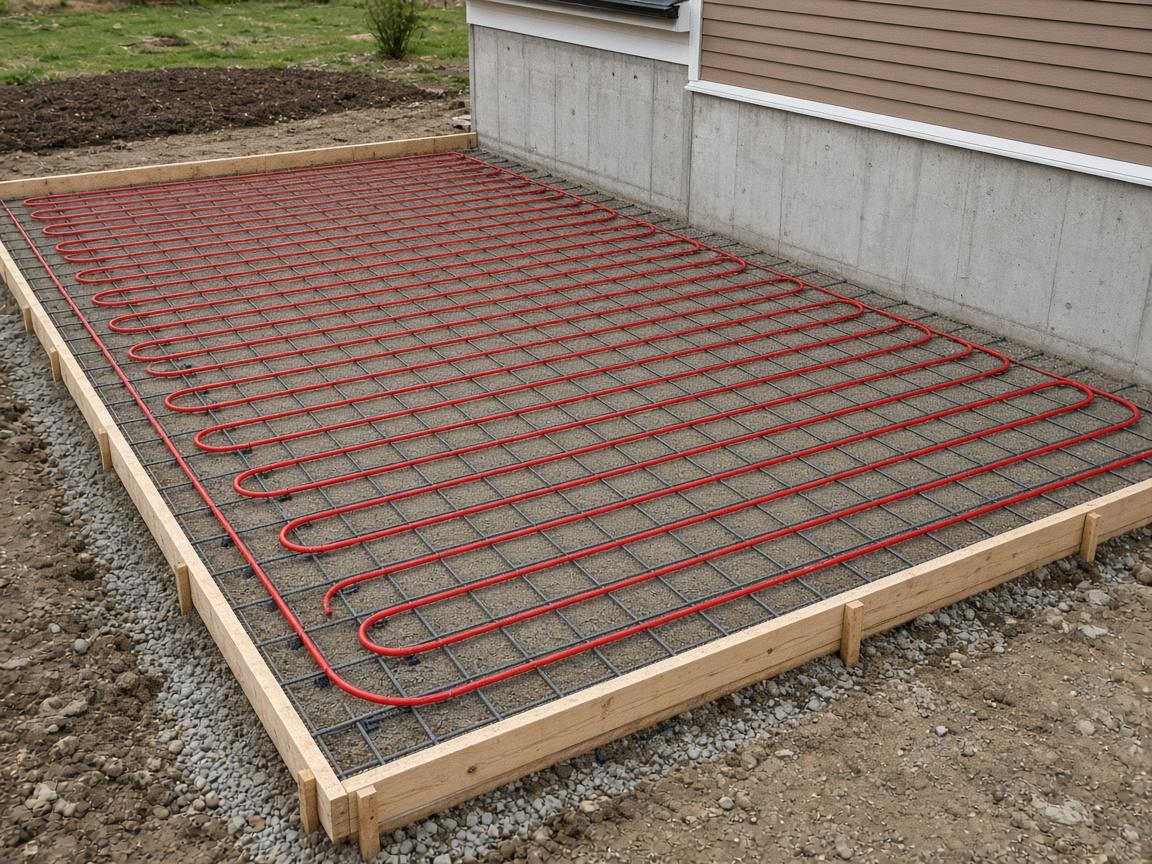
- Plan future features. If you might add a pergola, kitchen, or snow-melting system, plan the rough-ins now.
- Handle approvals. Permits, HOA review, and design review in some municipalities can take time.
- Reserve a construction slot. Spring schedules fill quickly.
Observe your yard in winter
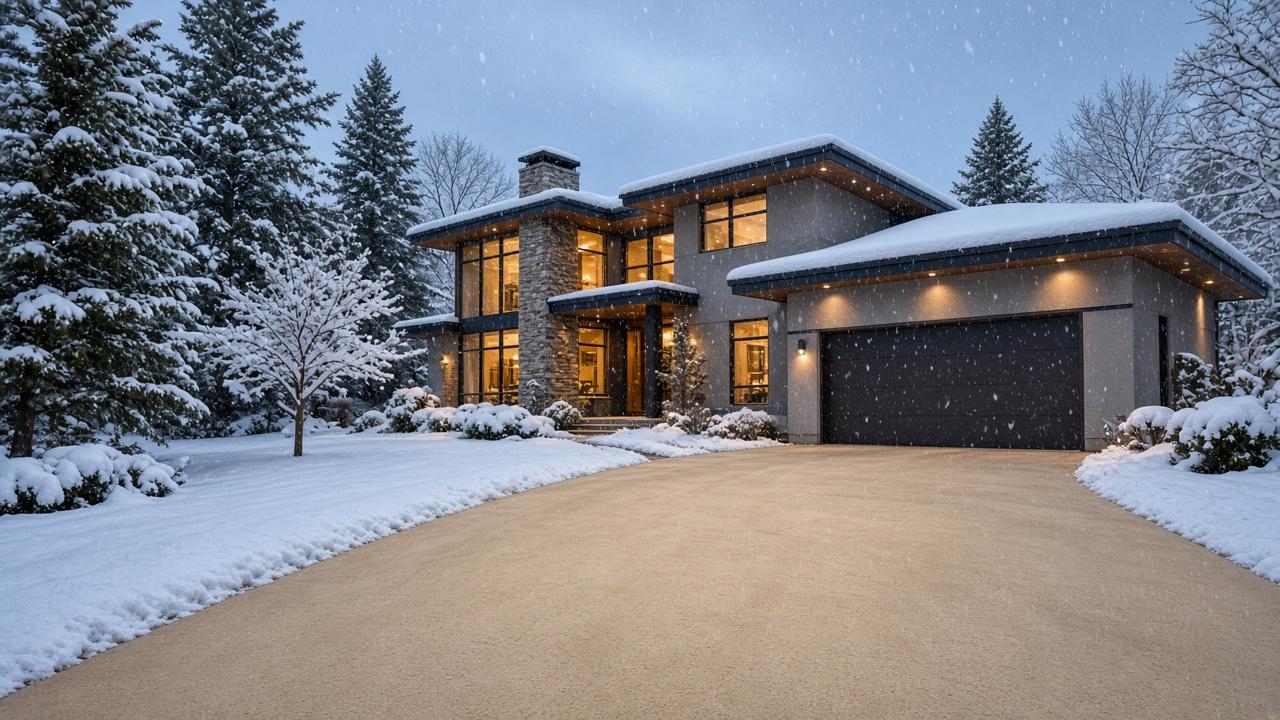
Winter also reveals useful information. Notice where snow drifts, where ice forms on walks and steps, where water pools during a thaw, and which paths you use most. Those observations can shape the design, from where a heated walkway would help most to where drainage needs attention.
The bottom line
Can a concrete patio be installed during a Rochester winter? Technically, with the right precautions. Should yours be? Usually not. Use the cold months to design and plan, and let the patio be built when conditions favor a durable result.
Use the off-season to plan.
Start the design conversation now so your patio is scoped, permitted, and ready when the weather is.
Plan Your Project